How to Choose the Right Corporate Event Venue in India (2026 Ultimate Guide)
A comprehensive framework for selecting corporate event venues for conferences, meetings, training programs, offsites and MICE events in India.
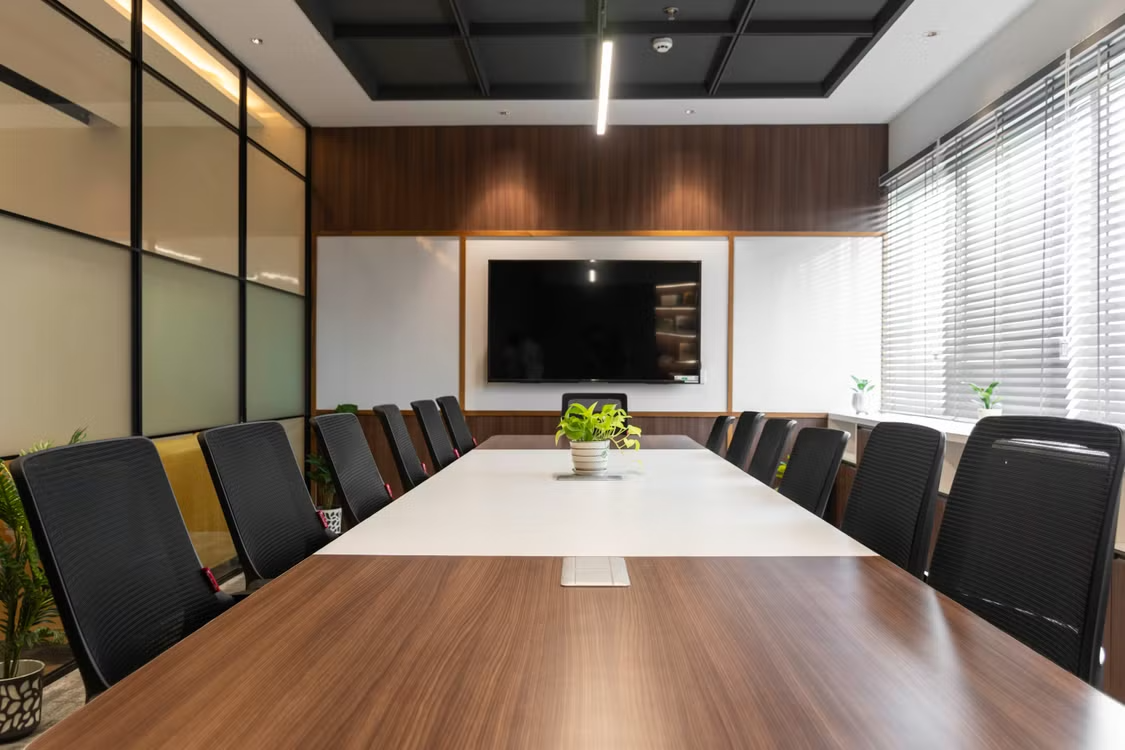
Table of Contents
Executive Summary
- Selecting the right corporate event venue is one of the most consequential decisions in the entire event planning process, yet it is frequently delegated to whoever has bandwidth rather than treated as a strategic choice.
- The venue shapes attendee experience, event logistics, operational efficiency, budget allocation, networking quality and, ultimately, whether the event achieves the business outcome it was designed for.
- Events built on a structured venue evaluation framework consistently outperform those built on instinct or convenience, because the framework forces planners to weigh business objectives, attendee expectations, accessibility, technology and total cost of ownership before falling in love with a ballroom.
- This guide lays out a practical, India-specific framework for evaluating and selecting corporate venues — one that holds up whether you are booking a 40-person boardroom in Gurugram or a 2,000-delegate convention in Hyderabad.
- Venue quality in India varies enormously across cities, venue categories and even individual properties within the same hotel chain, which is precisely why due diligence cannot be skipped, no matter how strong the brand name on the door.
Key Takeaways
- Define event objectives before venue sourcing begins
- Match venue type to event format and audience expectations
- Evaluate accessibility and travel convenience carefully
- Consider attendee experience alongside operational requirements
- Validate technology and infrastructure during site inspections
- Compare venues using a weighted scorecard rather than intuition
- Review total event cost rather than venue rental alone
- Identify hidden costs before contract negotiations
- Conduct physical site inspections whenever possible
- Build contingency plans before confirming venue selection
Why Venue Selection Matters
Treating venue selection as a checkbox in the procurement process is one of the most common and costly mistakes corporate event planners make. The venue is not a backdrop — it is infrastructure for the entire attendee experience, and it shapes outcomes in ways that are easy to underestimate until something goes wrong. A well-chosen venue lifts attendance, gives people room to network naturally, reinforces how the brand is perceived, and removes friction from execution. A poorly chosen one quietly works against the event at every stage: delegates arrive late because the address was hard to find, sessions run behind because the AV team is unfamiliar with the room, and the budget creeps upward because nobody asked about overtime charges until the invoice arrived.
Business Impact
Every corporate event exists to move a business metric — whether that is faster onboarding through better training, stronger pipeline through sharper sales enablement, tighter alignment across a leadership team, or simply a more engaged workforce. The venue should be selected as a tool in service of that specific outcome, not as a generic backdrop. A sales kickoff designed to energize a distributed team needs different spatial dynamics than a board strategy session designed for focused, confidential discussion, and the venue brief should say so explicitly before sourcing begins.
- Alignment with event goals
- Meeting and breakout space availability
- Flexibility for future requirements
- Support for branding opportunities
Attendee Experience
Long after the agenda is forgotten, attendees remember how the event felt — whether they could find the restroom without asking three people, whether the coffee break gave them a genuine chance to network, whether the seats were still comfortable by hour four. These details accumulate into a single overall impression of the organization that hosted them, and that impression travels well beyond the room.
- Ease of navigation
- Comfort and seating quality
- Food and beverage standards
- Restroom and common area quality
- Networking opportunities
Financial Impact
The venue with the lowest headline rental fee is rarely the most cost-effective choice once the full picture is assembled. A property an hour outside the city may save on room hire but add significant transportation and accommodation costs, plus the harder-to-quantify cost of delegates who simply decide the trip isn't worth it. Total cost of ownership — not the quoted rate card — is the number that should drive the decision.
- Venue rental
- Catering
- Accommodation
- Transportation
- Technology
- Hidden charges
Brand Perception
The venue is a visible, physical extension of how an organization wants to be seen. A premium financial services brand hosting a client summit in a worn, dated banquet hall sends a quiet but unmistakable signal, regardless of how strong the content on stage is. Conversely, a fast-growing startup might deliberately choose a converted warehouse or design studio over a five-star ballroom precisely because it signals the energy and identity they want associated with their brand.
- Venue ambience and aesthetics
- Brand alignment
- Uniqueness of space
- Impression on attendees
Risk Management
Risk management for an event does not begin on the event day — it begins the moment a venue is shortlisted. Questions about emergency evacuation routes, security protocols, backup power and the venue's track record for operational reliability are far easier to ask and verify before a contract is signed than to discover the hard way mid-event.
- Emergency procedures
- Security arrangements
- Power backup
- Operational reliability
- Liability coverage
Understanding Event Objectives
No venue brief should be written before the event's actual objective is nailed down in plain language. A leadership retreat intended to surface difficult strategic conversations needs privacy, small breakout nooks and an environment that encourages candor — open-plan convention space works against that goal no matter how impressive it looks in photos. A 1,500-person annual conference, by contrast, needs scalable infrastructure, clear sightlines to the stage and a layout that can absorb a large crowd without bottlenecks. Starting with the objective, rather than the venue inventory, prevents the common trap of falling in love with a space and then trying to retrofit the event to fit it.
Business Objectives
The nature of the business goal — whether it's upskilling a workforce, realigning leadership, energizing a sales team ahead of a new fiscal year, unveiling a product to the market, deepening a customer relationship, or strengthening a partner channel — should be the very first filter applied to any venue shortlist, because each of these goals implies a different room, layout and atmosphere.
- Training and learning
- Leadership alignment
- Sales kickoffs
- Product launches
- Customer engagement
- Partner events
Audience Profile
A venue that works beautifully for 200 twenty-something sales reps from a single city office may be entirely wrong for 50 senior executives flying in from six different countries. Seniority, industry norms, where attendees are traveling from, and any accessibility needs within the group should all directly inform which properties make the shortlist and which don't.
- Seniority level
- Industry background
- Geographic distribution
- Accessibility requirements
- Travel patterns
Success Metrics
Deciding in advance how venue effectiveness will actually be measured — not just whether people showed up, but whether the event moved the needle it was designed to move — keeps the venue conversation tied to outcomes rather than aesthetics, and gives planners a concrete basis for justifying the choice afterward.
- Attendance rates
- Engagement scores
- Lead generation
- Satisfaction ratings
- Business outcomes
Event Format
Format is the single biggest driver of physical requirements. A two-day training program needs breakout rooms and writable surfaces; a trade show exhibition needs loading docks and aisle width regulations; a hybrid town hall needs broadcast-grade connectivity that a beautiful heritage property may simply not have, no matter how willing the staff are to help.
- Conferences
- Meetings
- Training programs
- Exhibitions
- Offsites
- Hybrid events
Choosing the Right Venue Type
India's venue market spans a wide spectrum, from international hotel chains in business districts to converted heritage havelis in Rajasthan, and the right category depends far more on what the event needs to accomplish than on what looks most impressive in a brochure. Matching event objectives, audience expectations and budget to the appropriate venue category early prevents a lot of wasted site visits later.
Hotels
Hotels remain the default choice for most corporate events in India for a simple reason: they bundle accommodation, meeting space and catering under one roof and one point of contact, which dramatically simplifies coordination for multi-day programs or events with outstation attendees.
- Accommodation and event space together
- Professional event teams
- Built-in catering
- Business-friendly locations
Convention Centres
When attendance climbs into the hundreds or thousands, purpose-built convention centres outperform hotels on almost every operational dimension — column-free halls, configurable partition walls, loading access for exhibitor freight, and the sheer floor area that large conferences and trade shows require.
- Large capacities
- Flexible layouts
- Exhibition infrastructure
- Multiple halls
Resorts
For offsites and leadership retreats where the goal is deliberately to pull people out of their everyday work environment, resorts deliver something hotels in business districts cannot — open-air team activities, a genuine change of pace, and informal spaces where the best strategic conversations often happen outside the scheduled agenda.
- Team-building opportunities
- Relaxed environment
- Recreational activities
- Extended stays
Banquet Halls
Standalone banquet halls are a strong fit for award nights, networking mixers and celebratory events where the priority is atmosphere and flexibility rather than business-grade AV or breakout infrastructure, and they typically come at a meaningfully lower price point than hotel ballrooms of comparable size.
- Cost-effective
- Flexible layouts
- Suitable for social functions
Alternative Venues
When the goal is to make an event genuinely memorable rather than merely functional, unconventional spaces — a heritage mansion, a stadium suite, an art gallery, a working museum — can deliver an impression that no conventional banquet hall ever will, provided the operational basics (power, AV, accessibility) are verified rather than assumed.
- Museums
- Heritage properties
- Stadiums
- Art galleries
- Cultural centres
Capacity Planning
The number printed on a venue's spec sheet under 'maximum capacity' is almost always a theatre-style figure calculated with attendees packed shoulder to shoulder — it is rarely the number that matters once registration desks, breakout rooms, AV consoles and networking space are accounted for. Real capacity planning means working backward from how the space will actually be used on the day, not forward from a single optimistic number in a brochure.
Seating Layouts
The same room can comfortably seat very different numbers of people depending on layout — theatre-style maximizes headcount, classroom-style supports note-taking and longer sessions, cluster seating encourages small-group discussion, and boardroom or U-shape arrangements are built for conversation rather than presentation. Always ask venues to quote capacity by the specific layout the event actually requires.
- Theatre
- Classroom
- Cluster
- Boardroom
- U-shape
Registration Areas
The first five minutes of an event happen at the registration desk, and a cramped, poorly signed entry area can sour an attendee's impression before they've even found their seat. Adequate queueing space, fast badge printing, a clearly staffed welcome desk and obvious wayfinding all need to be planned for separately from the main session space.
- Queue management
- Badge printing
- Welcome desk
- Wayfinding
Breakout Spaces
Workshops, parallel tracks and smaller working sessions need rooms that are genuinely close to the main hall, not a ten-minute walk through a separate wing of the property — distance between breakout rooms and the plenary space is one of the most underrated factors in keeping a multi-track event running on schedule.
- Workshop rooms
- Discussion areas
- Parallel sessions
- Accessibility
Networking Zones
If networking is a stated goal of the event, it needs a dedicated physical space designed for it — comfortable seating clusters, easy access to food and drink, and enough open floor area that conversations don't feel like they're blocking traffic. Networking rarely happens well in a hallway people are trying to walk through.
- Comfortable seating
- F&B access
- Adequate space
- Ambience
Exhibition Areas
Exhibition and trade show components bring an entirely different set of capacity questions — aisle widths for foot traffic, loading dock access for exhibitor freight, sufficient power drops at every booth, and floor plans that don't create dead zones at the back of the hall that exhibitors will rightly complain about.
- Floor space
- Circulation
- Loading docks
- Power access
- Booth layouts
Location & Accessibility
In a country as geographically and infrastructurally varied as India, location is often the single factor that determines whether attendance targets are actually met. A venue that looks ideal on paper can quietly suppress turnout if delegates have to fight two hours of traffic to reach it, or if outstation guests can't find a direct flight connection. Location decisions deserve the same rigor as budget decisions, not an afterthought once the venue is already shortlisted on other merits.
Airport Connectivity
For any event drawing attendees from outside the host city, the drive time from the nearest airport — not just the straight-line distance — should be checked against realistic traffic conditions at the time of day attendees will actually be arriving, since a 40-minute drive on Google Maps can easily become 90 minutes during evening rush hour in cities like Mumbai or Bengaluru.
- Travel time
- Transport options
- Traffic patterns
Railway Connectivity
For domestic events with attendees traveling from tier-2 and tier-3 cities, proximity to a major railway station can matter as much as airport access, particularly when train travel remains the more practical or economical option for a meaningful share of the audience.
- Distance to station
- Transport availability
- Local connectivity
Road Accessibility
Peak-hour traffic in most major Indian cities can transform a venue from convenient to genuinely difficult to reach within the same day, so it's worth confirming both the typical commute time and whether viable alternative routes exist before locking in a venue near a known congestion corridor.
- Peak hour traffic
- Alternative routes
- Road quality
Parking
Parking shortages are one of the most common and most avoidable sources of attendee frustration at corporate events — confirming valet capacity, self-parking availability, dedicated VIP parking for senior guests, and coach parking for group transport well in advance prevents a chaotic arrival experience.
- Valet
- Self-parking
- VIP parking
- Coach parking
Nearby Accommodation
For venues that don't have rooms on-site, the surrounding hotel landscape effectively becomes part of the venue decision — delegates need a realistic spread of options across price points within a short, walkable or shuttle-able distance, not a single overpriced property a taxi ride away.
- Premium hotels
- Business hotels
- Budget hotels
- Walkable options
Local Amenities
What's within walking distance of the venue quietly shapes the attendee experience during breaks and after hours — access to decent restaurants, basic shops, a pharmacy or clinic, and a working ATM all reduce the small frictions that add up over a multi-day event.
- Restaurants
- Shops
- Medical facilities
- ATMs
Technology & Infrastructure
Technology has moved from a nice-to-have to a baseline requirement in venue selection, and the gap between venues that genuinely deliver on this front and those that merely claim to is wide. A property's marketing material will almost always promise 'high-speed internet' and 'state-of-the-art AV' — the only way to know what that actually means in practice is to verify it directly, ideally with a live test rather than a vendor's assurance.
Internet Connectivity
Internet failures are one of the most visible and embarrassing ways an event can go wrong, particularly for hybrid formats. Dedicated, ring-fenced bandwidth for the event (not shared with the rest of the hotel's guests), a genuine backup connection, full Wi-Fi coverage across all event spaces, and basic network security should all be confirmed — not assumed from a sales brochure.
- Dedicated bandwidth
- Backup internet
- Wi-Fi coverage
- Network security
Audio Visual Systems
AV quality has an outsized effect on how content is received — a brilliant keynote delivered through a muddy sound system or projected onto a washed-out screen loses most of its impact. LED wall resolution, projector brightness relative to ambient room light, microphone reliability, lighting flexibility and speaker coverage across the room should all be reviewed in person wherever possible.
- LED walls
- Projectors
- Microphones
- Lighting
- Speakers
Hybrid Event Capabilities
True hybrid capability is more than a single webcam pointed at the stage — it requires multiple camera angles, a stable streaming platform, the ability to bring remote speakers in seamlessly, and reliable recording for attendees who couldn't join live. Many venues that claim hybrid readiness have only ever tested it for a small internal meeting, not a full-scale event.
- Cameras
- Streaming platforms
- Remote speaker integration
- Recording capabilities
Power Backup
Power outages remain a real operational risk in many parts of India, even in major metros, and the cost of an AV blackout mid-keynote far exceeds the cost of confirming generator capacity and UPS coverage in advance. Ask specifically about load capacity and how quickly backup systems engage — a brief flicker is very different from a multi-second outage that drops a live stream.
- Generators
- UPS systems
- Power distribution
- Load capacity
Technical Support
The single biggest predictor of whether AV problems get fixed in 90 seconds or 20 minutes is whether the venue has dedicated, on-site technical staff for the duration of the event, rather than a shared technician covering three function rooms at once. Confirm response times and staffing levels explicitly, not just the equipment list.
- AV technicians
- IT support
- Production crew
- Response time
Budget Considerations
The quoted venue rental is almost never the number that determines whether an event came in on budget — total cost of ownership is, and it only emerges once catering, accommodation, transportation, production and the inevitable hidden line items are added together. Planners who anchor decisions purely on rental price routinely discover the 'cheaper' venue cost more in the end.
Venue Rental
A rental quote means little without knowing exactly what it includes — confirm setup and teardown windows separately from the contracted event hours, and get explicit clarity on which amenities (basic AV, Wi-Fi, furniture) are bundled in versus billed separately.
- Rental fee
- Setup time
- Teardown
- Inclusions
Catering
Food and beverage is frequently the largest single line item in an event budget, often exceeding the venue rental itself, so menu flexibility, ingredient quality and service standards deserve the same scrutiny as the room itself — a tasting session before final sign-off is worth the time it takes.
- Breakfast
- Lunch
- Dinner
- Coffee breaks
- Menu flexibility
Accommodation
For multi-day or outstation events, room rates can swing the total budget significantly, and group rates with negotiated complimentary rooms (often one free room per a set number booked) are standard industry practice that should always be raised proactively rather than left on the table.
- Room rates
- Group rates
- Complimentary rooms
- Cancellation policy
Transportation
Airport transfers, inter-venue shuttles and local taxi or ride-share availability all add up quickly, particularly for events with a large outstation contingent, and should be budgeted as a distinct line item rather than assumed to be the attendee's own problem.
- Airport transfers
- Shuttle services
- Taxi availability
- Parking costs
Production Costs
For events with significant staging, lighting design or video production needs, these costs can easily rival or exceed the venue rental itself — it's worth scoping production requirements early, alongside the venue search, rather than treating them as an afterthought once the room is booked.
- Lighting
- Staging
- Sound
- Video production
Hidden Costs
Service charges, applicable taxes, overtime fees for running past the contracted hours, internet surcharges and per-unit power consumption fees are the line items that most often surprise planners after a contract is signed — asking for a fully itemized quote upfront, with every potential charge spelled out, is the single best defense against budget surprises.
- Service charges
- Taxes
- Overtime
- Internet charges
- Power consumption fees
Venue Evaluation Scorecard
Gut feeling is a poor substitute for a structured comparison, especially when several stakeholders are weighing in with different priorities. A consistent scorecard — applied identically across every shortlisted venue — turns a subjective debate into an objective, defensible decision, and gives procurement and finance teams a clear paper trail for why a particular venue was chosen.
Weighting Framework
Not every event prioritizes the same criteria equally — a client-facing summit might weight location and brand experience heavily, while an internal training session might weight cost and technology infrastructure instead. Agreeing on weights before scoring begins, and getting stakeholder buy-in on those weights, prevents the scorecard from becoming a post-hoc justification for a decision someone had already made.
- Location 20%
- Technology 20%
- Capacity 20%
- Service 20%
- Budget 20%
Scoring Template
A consistent 1-5 scale applied across every venue, paired with brief written notes explaining each score and a simple risk flag for any concerns, keeps comparisons honest and prevents one impressive site visit from outweighing a more thorough but less flashy evaluation of a different property.
- 1-5 scale
- Reviewer notes
- Risk rating
- Weighted scoring
Decision Matrix
Bringing every shortlisted venue's scores into a single side-by-side matrix — with strengths, weaknesses and a final weighted ranking laid out clearly — makes the final decision meeting dramatically shorter and far less prone to the loudest voice in the room winning the argument.
- Venue A
- Venue B
- Venue C
- Final ranking
Procurement Documentation
Recording the assumptions made, the evaluations conducted and the approvals obtained at each stage isn't just bureaucratic box-ticking — it protects the planning team if questions arise later, and it gives future event teams a documented precedent to negotiate from when booking the same venue again.
- Assumptions
- Evaluations
- Approvals
- Contract terms
Common Venue Selection Mistakes
Most venue selection failures are not exotic — they're the same handful of avoidable mistakes repeating across organizations and event types. Recognizing the pattern in advance is often enough to prevent it.
Choosing Only On Price
The venue with the lowest sticker price frequently turns out to be the most expensive choice once weak Wi-Fi forces a last-minute hotspot rental, or thin walls force an unplanned upgrade to a quieter room. Total cost of ownership and the attendee experience it buys should drive the decision, not the number on the first page of the quote.
- Hidden costs
- Attendee experience
- Service quality
- Value over price
Ignoring Travel Time
A venue that is technically within city limits but practically two hours away during business hours will quietly erode attendance, no matter how good the content is — distance should be measured in realistic commute minutes, not kilometers on a map.
- Attendance impact
- Attendee fatigue
- On-time arrival
- Accessibility
Skipping Site Visits
Photographs and virtual tours are curated to show a venue at its absolute best, and they routinely hide problems that only become obvious in person — a noisy HVAC system, a parking lot that floods in monsoon, or a loading dock too narrow for the planned exhibition booths. A physical walkthrough before signing is non-negotiable for any event of meaningful scale.
- Layout validation
- Infrastructure check
- Service assessment
- Risk identification
Underestimating Technology
A single dropped video call or a microphone that cuts out mid-keynote can undo weeks of careful content preparation in seconds. Internet reliability, AV quality and hybrid readiness need to be tested, not taken on faith from a sales pitch, well before the event date.
- Internet reliability
- AV quality
- Hybrid readiness
- Technical support
Missing Hidden Costs
Service charges, taxes, overtime fees and per-unit power charges have a habit of appearing for the first time on the final invoice rather than the initial proposal. Pushing for a fully itemized quote at the outset — and asking explicitly what is not included — closes off this entire category of budget surprise.
- Service charges
- Taxes
- Overtime fees
- Power charges
Poor Contract Review
Cancellation terms, liability clauses, force majeure provisions and payment schedules are the parts of a venue contract most likely to be skimmed and most likely to matter if circumstances change. For events of significant size or budget, a proper legal review before signing is worth the time it adds to the process.
- Cancellation policies
- Liability clauses
- Payment terms
- Force majeure
Final Venue Selection Checklist
A venue decision made in stages — planning, evaluation, commercial, and pre-event — is far less likely to leave gaps than one rushed through in a single sitting. Each stage below should be substantially complete before moving to the next.
Planning Stage
Before a single venue is contacted, the event's objectives, budget envelope, attendee profile and overall timeline should be locked down well enough that they can be communicated consistently to every venue being evaluated.
- Define objectives
- Define budget
- Define attendee profile
- Establish timeline
Evaluation Stage
With a shortlist in hand, this is the stage for physical site visits, gathering detailed proposals, and running every venue through the same scorecard so the comparison is genuinely apples-to-apples rather than based on whichever sales pitch was most persuasive.
- Shortlist venues
- Conduct site visits
- Compare proposals
- Score each venue
Commercial Stage
Once a preferred venue emerges, this is where pricing gets negotiated in earnest, the full contract gets reviewed line by line, and commercial terms are finalized — rushing this stage is where most of the budget surprises discussed earlier originate.
- Negotiate pricing
- Review contracts
- Finalize terms
- Secure signatures
Pre-Event Stage
In the final stretch before the event, room layouts, catering counts, technical requirements and contingency plans for anything from a no-show speaker to a power outage should all be confirmed in writing with the venue, not assumed to be understood.
- Confirm layouts
- Confirm catering
- Confirm technical requirements
- Review contingency plans
FAQs
How early should I book a venue?
Large corporate events should ideally be booked 3-12 months in advance depending on scale and seasonality.
What is usually the biggest venue-related expense?
Venue rental and catering are typically the largest cost components, although accommodation and production costs can become significant.
How many venues should I compare?
A shortlist of three to five venues is usually sufficient.
Hotels or convention centres?
Hotels are often better for meetings and conferences requiring accommodation, while convention centres are better for large-scale events.
How important is parking?
Parking significantly affects attendee experience, particularly in urban locations.
Should I conduct a site visit?
Yes. Site visits help validate assumptions and identify operational challenges.
What should a venue scorecard include?
Capacity, accessibility, technology, service quality, flexibility and budget.
How do hybrid events change venue requirements?
Hybrid events require stronger internet infrastructure, streaming capabilities and technical support.
What is the average cost per attendee for a corporate event in India?
Cost per attendee varies by city, venue category and event type. In metros like Mumbai and Delhi, expect ₹5,000-12,000 per attendee for a one-day conference. Tier-2 cities typically cost 20-40% less.
How do I negotiate better rates with venues in India?
Book during off-peak months (March-September), negotiate based on total event value, request complimentary rooms for organizers, ask for waived service charges and commit to multiple events for volume discounts.
What are the top corporate event cities in India?
Mumbai, Delhi NCR, Bengaluru, Hyderabad and Chennai are India's top corporate event destinations, with Goa and Rajasthan leading for offsites and incentive programs.
Related Articles
- how-to-plan-successful-mice-events
- how-to-choose-the-right-corporate-event-venue-in-mumbai
- corporate-event-budget-planning-guide
Related Venue Types
References
- VenueExchange Venue Selection Framework — VenueExchange Research
- MPI Event Planning Standards — MPI
- ICCA Industry Research — ICCA
- India MICE Industry Reports — Industry Research
- VenueExchange Corporate Venue Procurement Framework — VenueExchange Research